
Cooperative Care with Companion Animals: Improving Participation & Welfare with Our Best Friends
Sarah Dugger, KPA CTP
Good Dog & Co. Founder & Animal Trainer
For ABMA Behavior Month 2026, Good Dog & Co. is demonstrating the positive impacts of cooperative care and how to apply this training to the companion animals in our lives to improve our bond and their welfare. [Watch our cooperative care training examples on the ABMA Facebook page] to see these concepts in action, then read on to learn more about the training behind them and how to get started with your own animals.
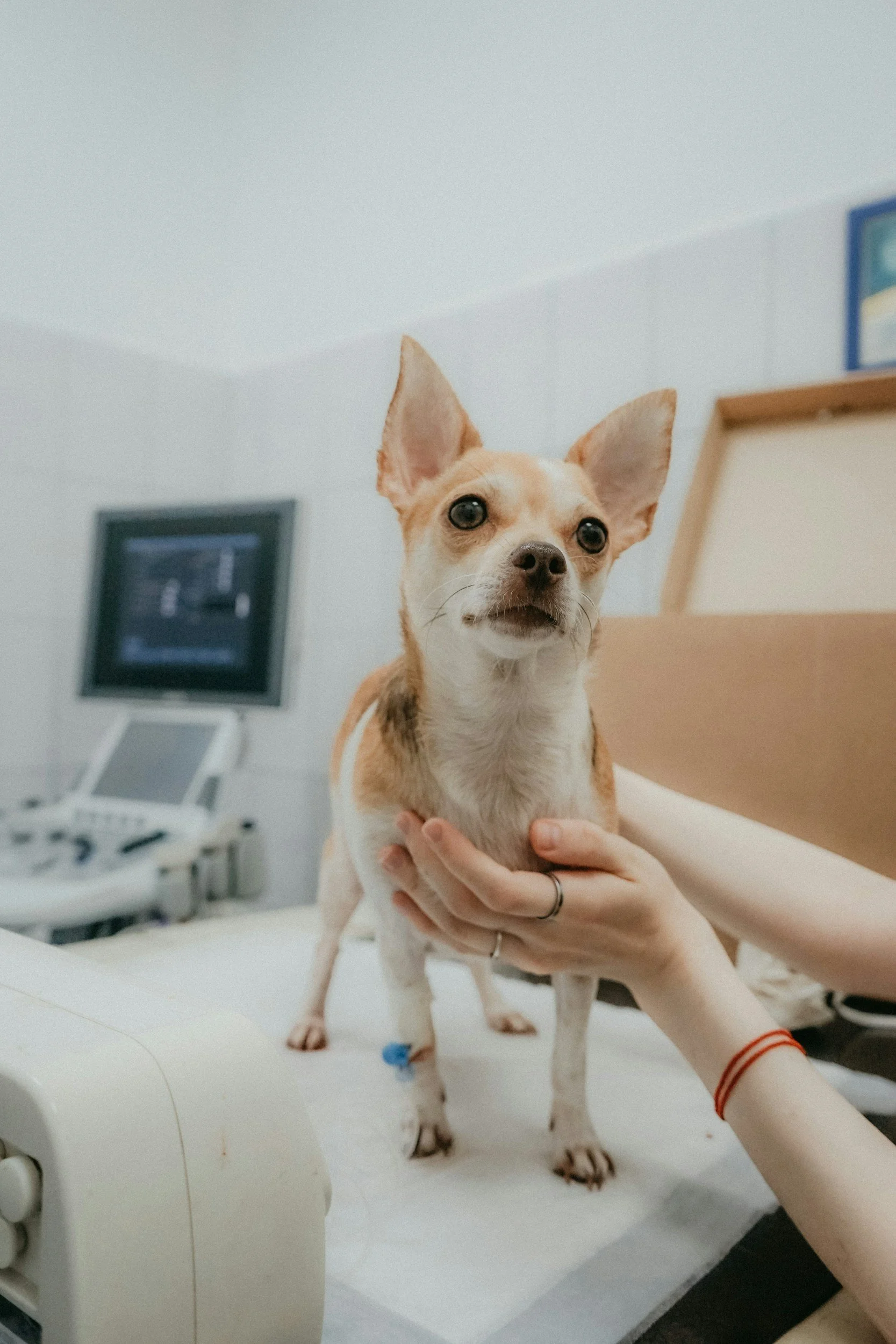
Cooperative care training has become an essential part of our toolkit for improving the quality of life for animals in human care, whether it’s a tiger in a zoo, an elephant in a sanctuary, a reptile in a tank, a bird, cat, or dog in a home or shelter. We can take this training and meet the animal wherever they are at in a way that empowers them and helps us take the best care of them.
Some cornerstones of positive animal welfare, described by Ken Ramirez in The Eye of the Trainer, include nutrition, health, environment, and behavior programs to promote healthy animals, suitable conditions for individual and species-specific needs, and behavior programs around enrichment, exercise, and cooperative care. All are important, but as Ken points out, the behavior and environment aspects are often seen as privileges or “nice to have” rather than completing the picture of animal care and welfare like they do.
We are excited to bring this information from behind the scenes of animal care into the forefront of our community. Our team first learned how to train cooperative care in AZA-accredited zoological facilities, where animals were often behind a barrier and all we had was a bucket of food. It turns out, these conditions were exactly what we needed to pave the way toward the application of positive reinforcement, adding valuable outcomes to an animal’s active participation to increase the likelihood of participating more in the future. These procedures can be inherently invasive, so if something made them feel uncomfortable through the procedure (whether it was getting a poke for a vaccine or blood draw, adding a harness or leash, holding still for therapeutic treatments, or perhaps flopping on their side for X-rays), the animal had an easy and safe way to say “no.” We respond by removing our hands, assessing where we had asked for too much too fast before relaxing criteria and trying again.
The two-way communication and reinforcing of small approximations toward cooperative care goals all accumulate over time, and one day, you find yourself able to ask a tiger to lean in for their vaccines instead of squeezing them against a wall or darting them from a distance (which you can only get away with once):
If a tiger can learn to lean in for the poke of a needle, imagine what our animals at home are capable of. The power to say “no” and the positive reinforcement for saying “yes” has led to improved welfare and human-animal relationships based in trust, care, and often enthusiastic participation in behaviors we may have never thought possible to train for before.
How to train cooperative care behaviors
1. What does “yes” look like?
This can be a behavior your animal already knows and you can build on, or you can teach them something totally novel. This behavior should be observable and measurable, not a label. Some examples include:
a. Four feet on a station for scale training
b. A chin rest on a chair for ear touching and cleaning
c. A paw target to your hand for nail trims
d. Approaching with calm, attentive behavior for a harness going over the head
e. Leaning into the poke of a finger or needle
2. What does “no” look like?
Whatever the behavior is that lets us know they need a break, we give their behavior meaning by removing our tools and hands as a consequence when we see it. Therefore, you may predetermine the “no” and decide to remove hands when you see a specific behavior. Or, your animal may offer something you didn’t expect that still works well for the “no.” Either way, our immediate response when we see it is hands off.
When an animal learns they can say “no,” we find they are more likely to say “yes” in the future as a result. We are asking for more of our animals with cooperative care training, so it’s best to anticipate the “no,” view it as an opportunity to build trust by honoring it, take it as information about the session, then determine what to change to make it easier and more reinforcing to say “yes” next time.
Some examples of “no” may include:
a. Leaving the station
b. Lifting a head from a chin rest
c. Removing a paw
d. Lip licking, turning the head, or moving away in response to a harness
e. Leaning away from the hand or syringe
These behaviors need to be considered in context and alongside the animal’s other body language. A single behavior may not always mean “no,” but it can be valuable information that the animal is uncomfortable or needs more training, and perhaps smaller approximations.
3. How will you reinforce the “yes” response?
Food reinforcers like favorite treats or a diet item your animal enjoys are typically a good starting point. A reinforcer is anything your animal likes and will work for under these conditions.
You can also include a marker signal (also called a “bridge” or bridging stimulus) to let them know when they’ve gotten it right. By timing the signal with the goal behavior (like maintaining a chin rest) and providing a treat every single time you bridge, you help maintain its value while giving them valuable information about what to do for the treat.
You may choose a verbal bridge/marker like “good” or “yes” or perhaps the mechanical click of a clicker, blow of a whistle, or flash of a light. As Susan Friedman reminds us, we could use the word “Dumbledore” because it really doesn’t matter, as long as the consequences that follow are valuable to the learner.
4. Building duration into the “yes” behavior
Building duration into the “yes” behavior, or increasing the time spent holding the position between treats, is part of the shaping process. We can set our learners up for success by building duration variably, bouncing between ~1–5 seconds before providing a treat, then between ~5–10 seconds perhaps. The goal duration is based on the practitioner’s needs for the procedure at hand. For example, when it comes to a nail trim, how long does it take to hold a paw, manipulate the nail, and find the location before it’s time to clip?
Some animals may participate with a synchronous rate of reinforcement, where they remain in position for the procedure as they eat treats continuously. This would still be a duration skill, with a high rate of reinforcement. Some individuals can do well with this, while others benefit most from waiting for the treat at the end as you may notice them moving away from the handler, and only orienting for the flow of treats.
Pro tip: Try to build duration based on the individual animal’s progress and comfort, rather than pushing for a predetermined time.
5. Introduce predictor signals when it’s time to add a stimulus that may be more invasive.
Giving a predictor cue can reduce stress, increase predictability, and support participation. Think about how it might feel to go to a doctor who doesn’t tell you when they are about to poke you, for example.
a. Saying “ear” before flipping a dog’s ear up
b. Saying “touch” before touching their body
c. Saying “poke” before poking
d. Saying “cut” before adding pressure on the nail
Not only do predictor signals help an animal anticipate what’s coming, they can become cues for the behavior we want to see. An animal can learn to respond by holding position, and through repetition, they can also learn that the stimulus predicts something good is coming soon. They learn the association between the predictor signal, the behavior, and the valuable consequence of our bridge and treat. How cool is that?!
6. Reinforce small approximations.
After your animal learner is actively participating in the “yes” behavior, holding the position between treats with duration, and waiting through the predictor signal and tactile stimulation, you’ve already been reinforcing small approximations and going at their pace. Now we build up the intensity of the aversive pieces incrementally, challenging them when you see no hesitation to stay in position, and eventually teaching them for even harder conditions than the actual procedure will produce, for a treat or other positive outcome on the other side.
a. Ear cleaning? Start with lighter touches where they are comfortable before adding more intensity and gradually work toward the areas involved in cleaning the ear canal, safely and compassionately. A simple cotton swab on the outer ear may be more tolerable as an early approximation.
b. Nail trims? Start by gently touching the nail, then progress to handling it and introducing the sensation of the clippers by squeezing the tips with your fingers, in baby steps. Build up gradually while monitoring the animal’s response.
c. Poke for a vaccine or blood draw? Begin with a gentle poke using your finger, then gradually introduce the sensations like massaging the area, poking with the tip of a pen or pencil, and ask your vet about practicing with a blunted syringe or with a staff member during a happy visit.
Work with your veterinary team to determine appropriate training steps and avoid causing pain or pushing the animal beyond their comfort. The goal is to help the animal become familiar with the experience while maintaining their ability to participate.
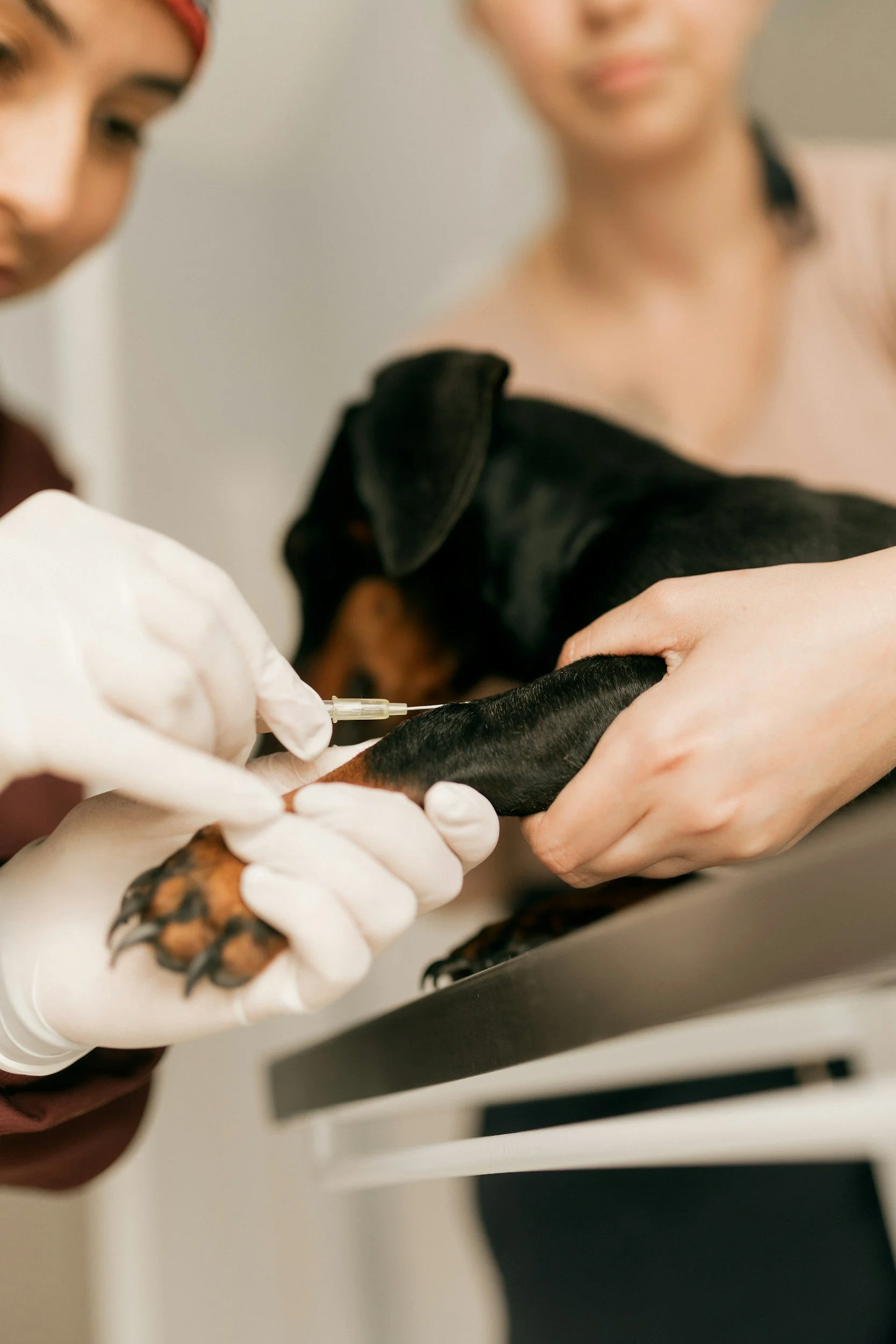
Training cooperative care behaviors is not only kind and protective of relationships and welfare, it has the power to save lives. We see so many animals develop problematic behaviors because they have been forced to endure the care that they need. These behaviors can become aggressive, harmful, and in some cases can lead to re-homing or behavioral euthanasia. There is also a lot of nuance to this practice, and animals with these harsher backgrounds may need a little more time and sensitivity to make progress. We recommend training before any harm has been done, but know, it is never too late to begin. Animals are incredibly resilient.
Case study: Casey, the golden retriever at the beginning of the ABMA highlight reel, was restrained repeatedly to treat ear infections. He developed increased aggression, attempting to bite people he historically trusted. He was muzzled and sedated, which his guardian reported made his behavior worse, then finally learned the skills when his compassionate and loving guardian realized he needed more skills for regular ear care. With the help of our Central Ohio trainer, Katie Stevens, Casey recovered in our Day Training program.
“Before starting training, I was feeling pretty hopeless about being able to care for my dog's health in a way that didn't completely destroy his trust in me. He was terrified of any type of "procedure", resulting in the need to muzzle, restrain, and heavily sedate him for something as simple as an ear swab. After speaking with Sarah just once, I felt much more confident that I could help this situation and make dealing with my dog's chronic ear infections a much better experience for both of us. After just 2 weeks of day training with Katie, my dog was opting in to care and was not running scared from the ear cleaner and the nail clippers. Katie and Sarah helped both my dog and me learn a strong foundation of skills, so that we could continue progressing in a way where we both felt confident and secure. While my dog still hits roadblocks and has times of clacking and barking when we push too far, the training has resolved my fear that our bond is being broken by repeated bad experiences. We are continuing to hit new milestones every day, including our first true nail clip today with no fear or lashing out. I had an initial worry about the financial aspect of professional training, but now feel that it was completely worth it for both me and my dog.”
— Lydia H., Columbus, OH
If you need any help or guidance building cooperative care behaviors with your animal, we would be happy to help you get started with a call today.
Did you know? Good Dog & Co.’s Columbus, OH team was ranked #1 in the city & #2 in the state of Ohio on Sniffspot this year.
Additional resources
Paper: The Power of Trust by Steve Martin & Susan Friedman https://naturalencounters.com/wp-content/uploads/2020/04/ThePowerofTrust.pdf
The ABMA podcast, Animal Behavior Conversations: Cooperative Care— Asking Animals to Participate with Wouter Stellaard https://creators.spotify.com/pod/profile/theabmapodcast/episodes/32-Cooperative-Care---Asking-Animals-to-Participate-with-Wouter-Stellaard--Behavior-360--The-Kuzo-Group-e2a53qu/a-aaeepq1
Animal Training Academy Podcast: Honoring the No, Shaping the Yes with Dr. Susan Friedman https://open.spotify.com/episode/0aH0pjLnZW7uYzgvU7GMWq?si=L5FoOdjzQMqzF-Djxk9fNQ
Book: Cooperative Care: Seven Steps to Stress-Free Husbandry by Deborah A. Jones
https://www.dogwise.com/cooperative-care-seven-steps-to-stress-free-husbandry/?srsltid=AYCX9vIDCS4YN89AV8ngxaLCWz16rGPqjIkMCztmBV0s2DmdDVtFmxkF
